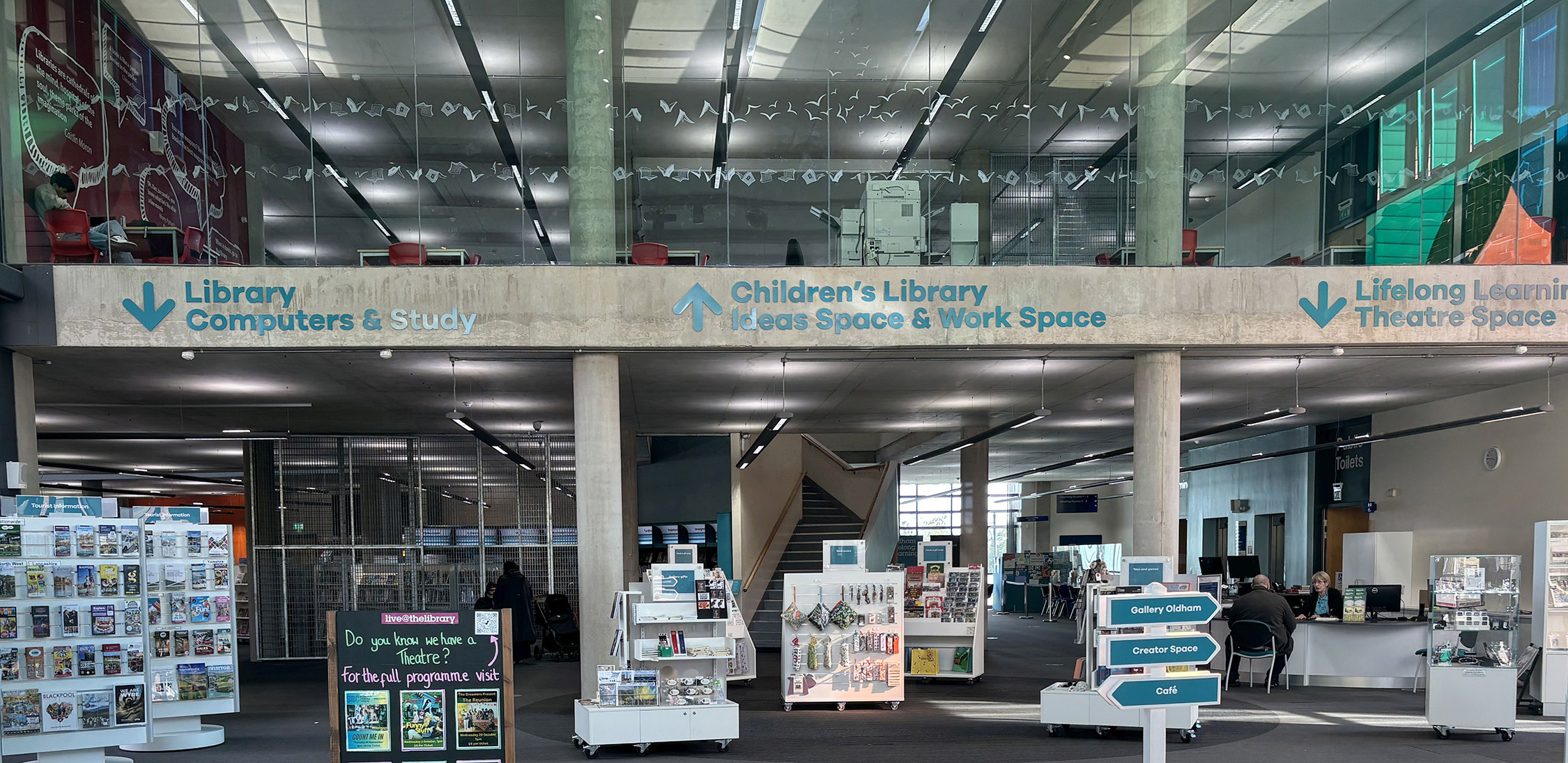
Libraries come in all shapes and sizes and are now co-located with many different services. Few building projects are as complex as a public library in terms of mix of audience, furniture, equipment and varied purpose. This requires careful space planning to manage conflicting needs. Who gets the best space and why is the most difficult question in any design.
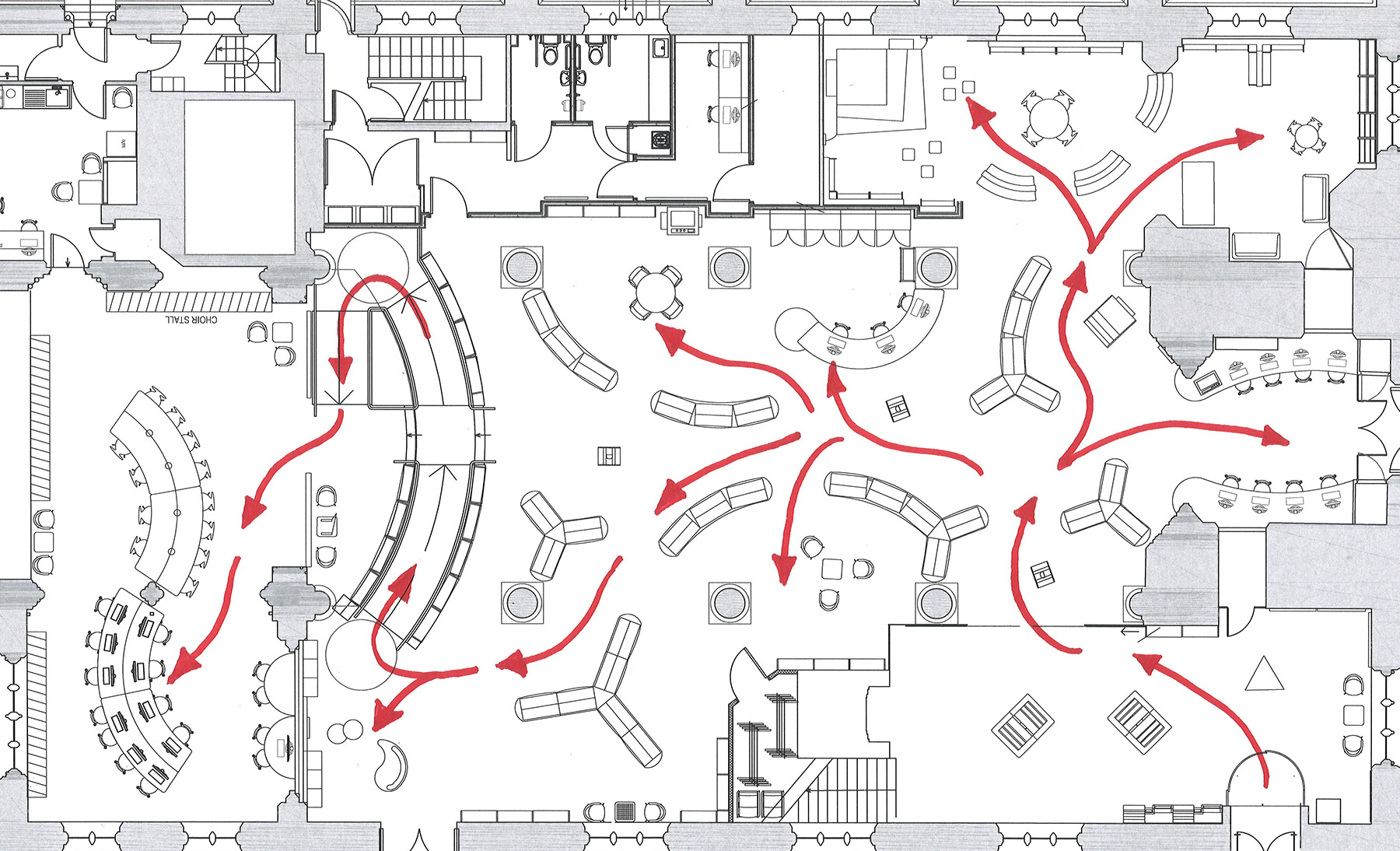
At Opening the Book, we have studied the way people move through library spaces, which way they turn, how far they go, where they stop. Thousands of customer observations have built a unique bank of user behaviours. We have also collected more than 60,000 library customer interviews, gathered from our online training programmes, to understand exactly how library customers choose a book.
We apply this knowledge in our designs to create layouts which pull customers forward to explore the whole space. Views open up as you move through and books are brought into the eyeline at every turn. Our unique shelving shapes create attractive browsing spots where it is easy to step out of the flow to linger, look and take.
Birtley & Blaydon Libraries Case Study →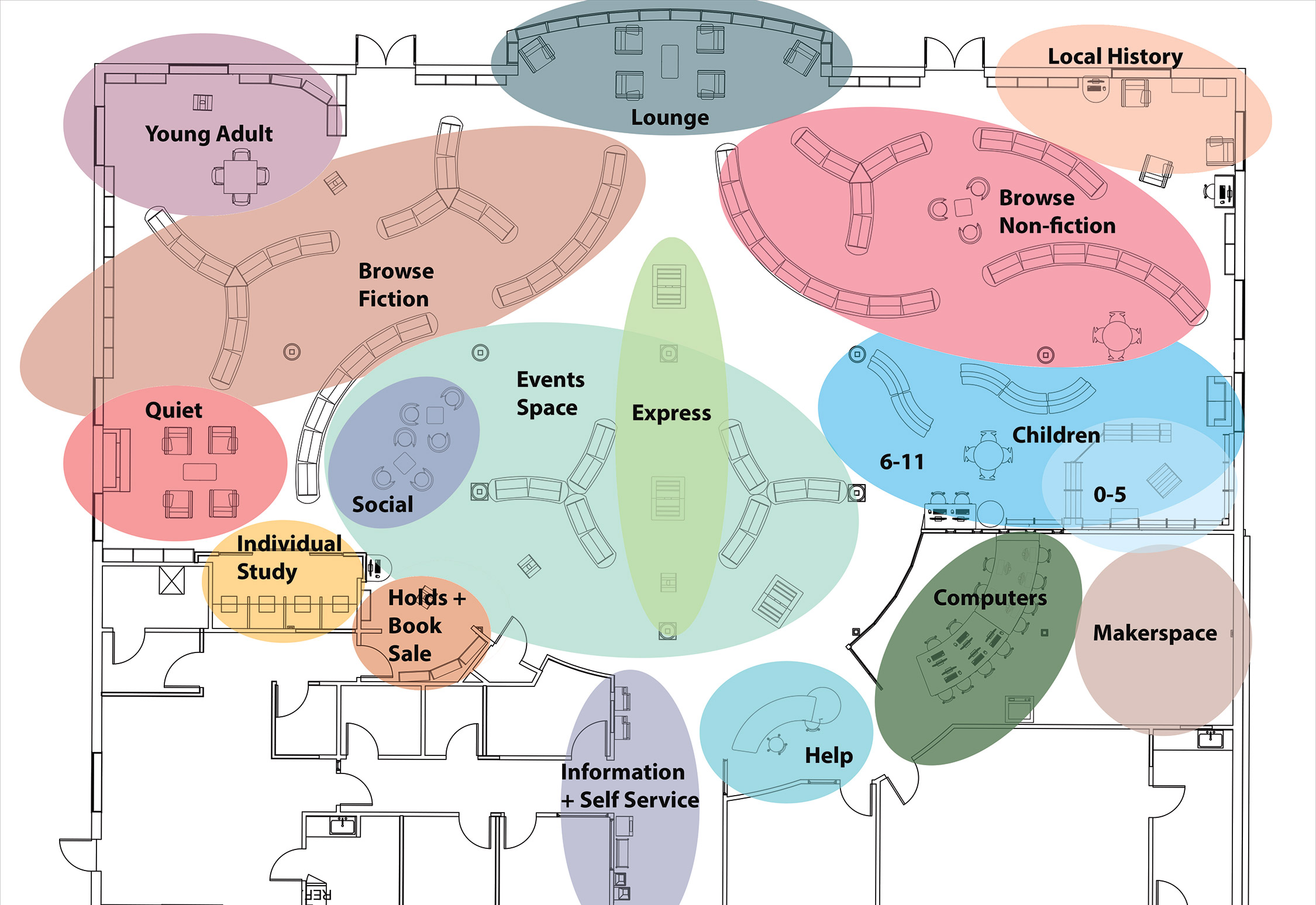
On each project we work with you to fully understand your priority audiences and services. We then design a zonal scheme which gives the right balance between areas for different ages, activities and resources. Bookcases can break a space into separate zones while keeping a coherent whole. A showcase of books can create an attractive curved backdrop enclosing seating or events in front. Mid-floor shelving can define the boundary between adult and children if adult books are displayed on one side and children’s books on the other. Bookcases can hide floor problems, manage changes in ground level, screen staff or storage areas and help absorb sound.
Niagara-on-the-Lake Public Library places information, help and self-service conveniently at the entrance, followed by express display for those who want to choose quickly. A large shelving display wall creates a social space on one side and a quieter space on the other. Computers and a makerspace are in the enclosed room where glazing allows light and makes activities visible from outside while containing noise. This zonal plan works with the building and uses shelving shapes to define areas — there is no need to sign the spaces.
Niagara-on-the-Lake Case Study →Clever space planning is essential when it comes to supporting larger events. This is not just about putting everything on wheels and sweeping it to one side. Can the layout offer an attractive backdrop for a large seated audience? Are there spaces for small group meetings without moving a lot of furniture while the library is open?
We have designed integral spaces not only for large author events and regular rhymetimes, but also for group meetings; lunchtime presentations; health and employment one-to-one advice sessions; film clubs; table-top fairs; pop-up partner promotions.
Sale Library Case Study →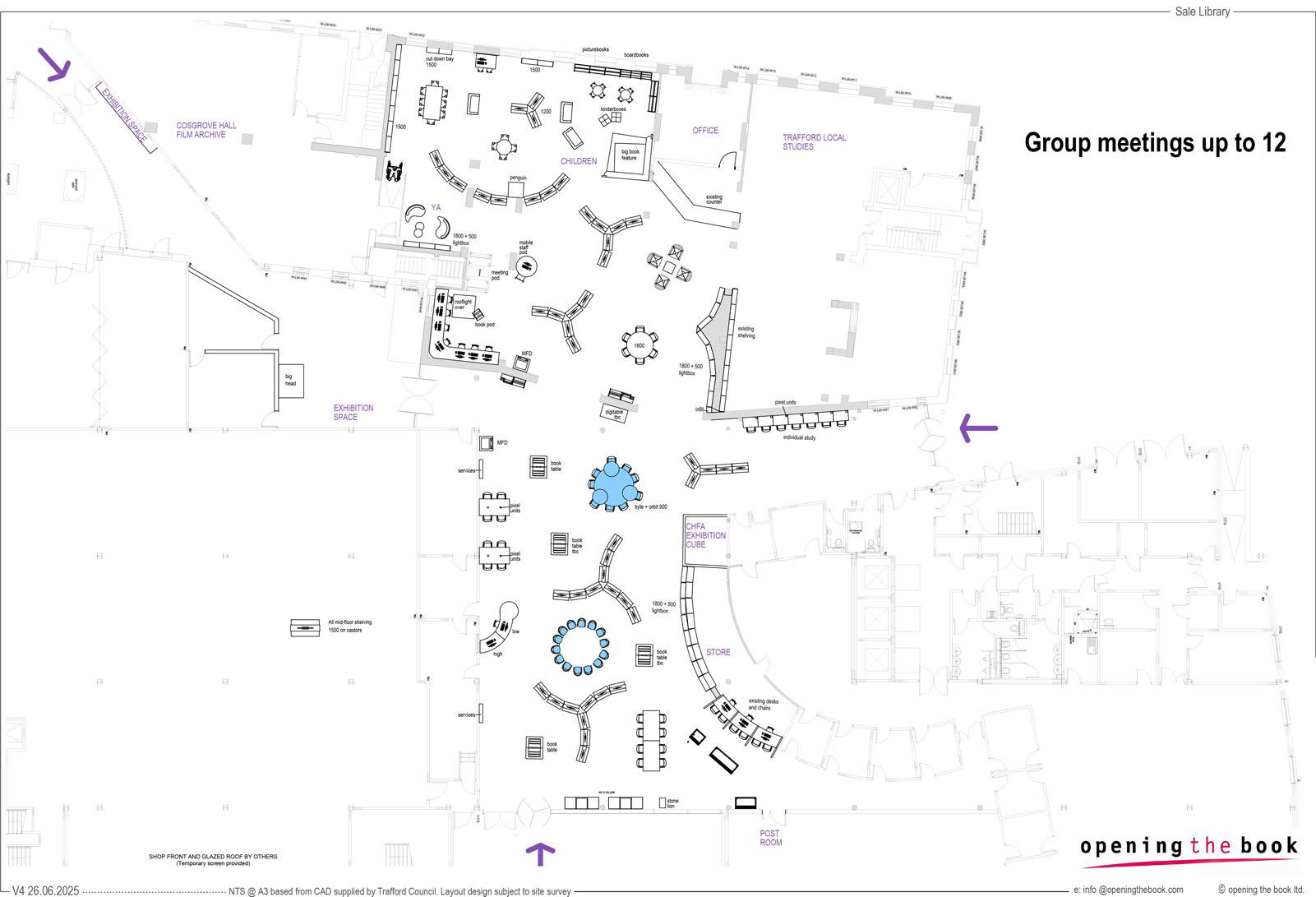
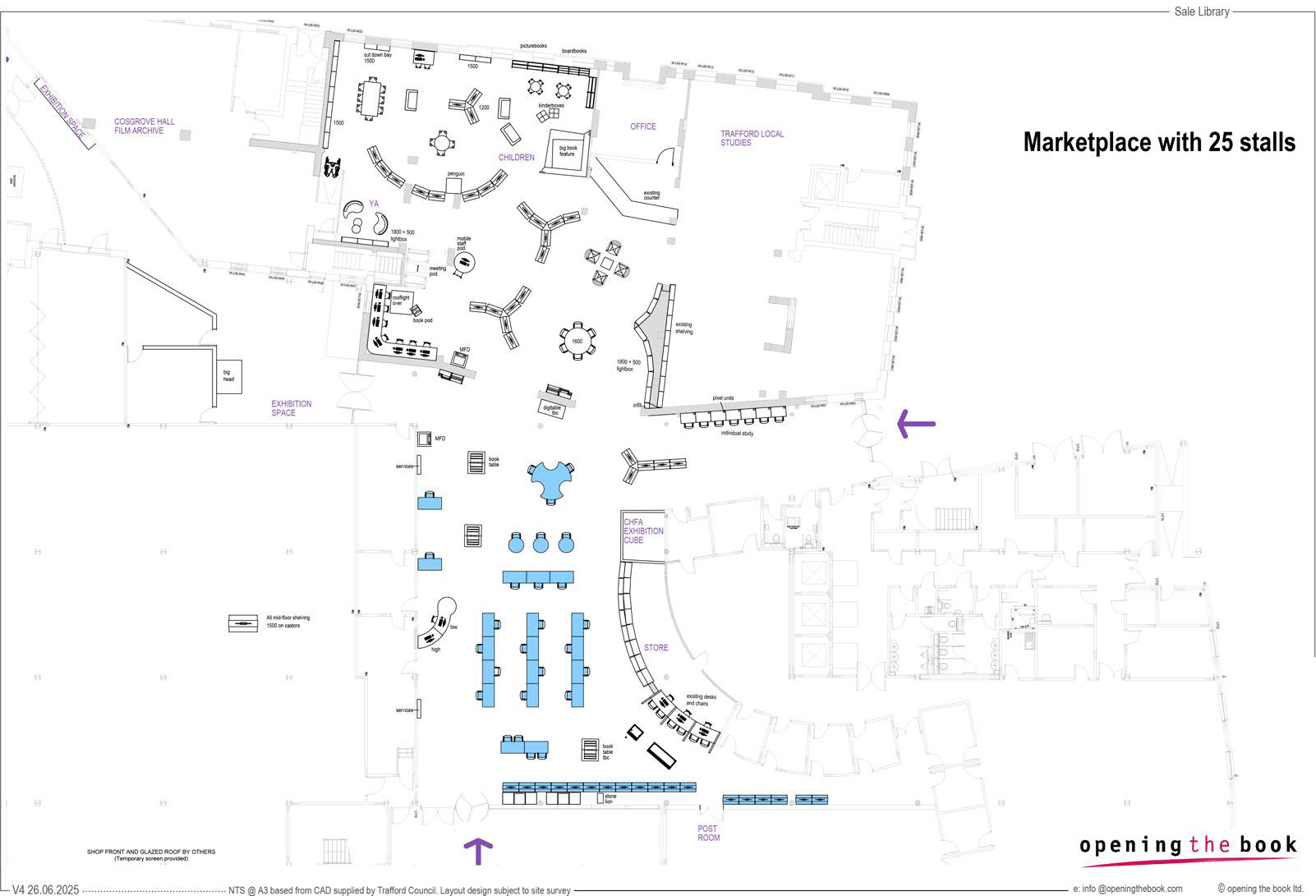
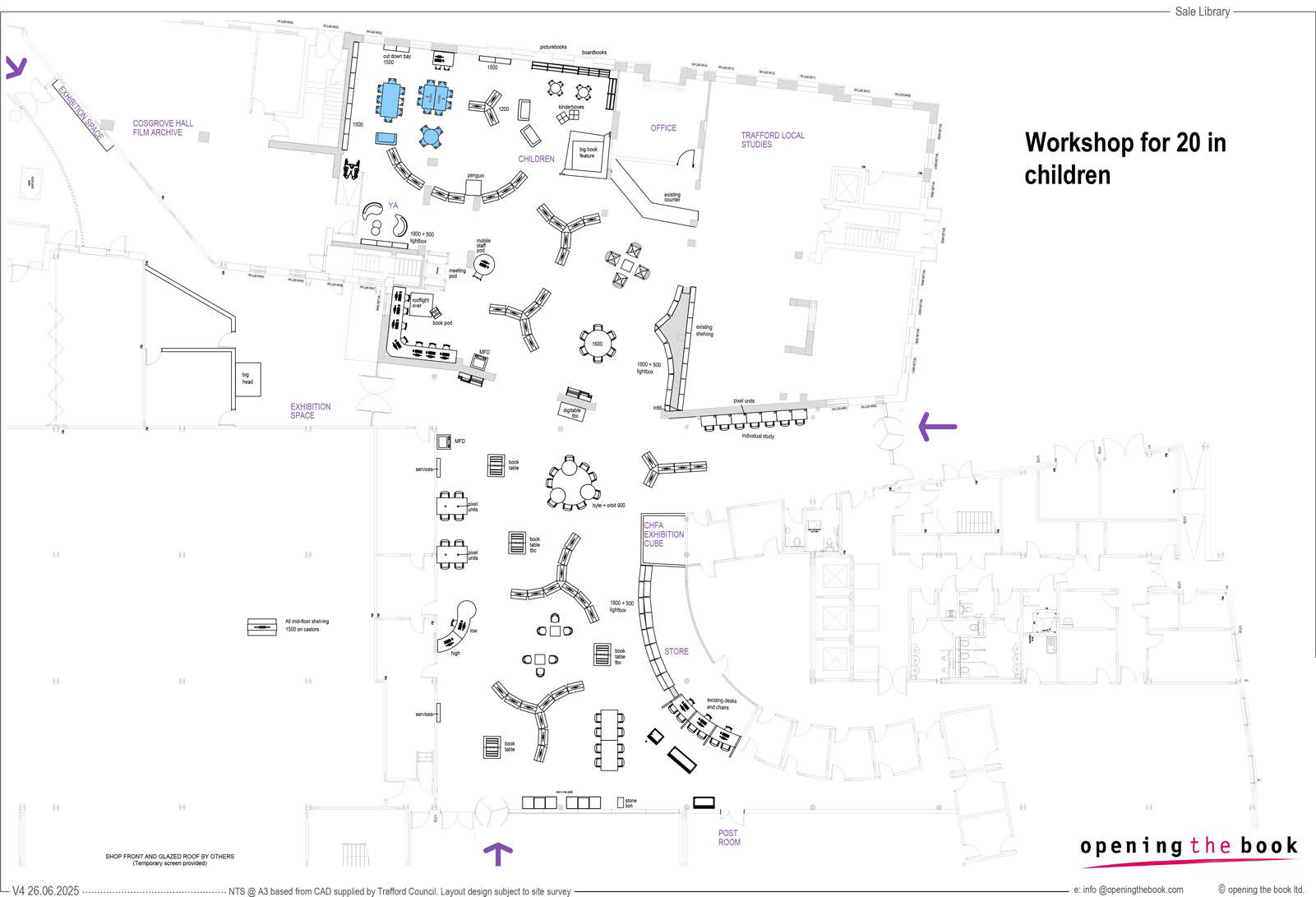
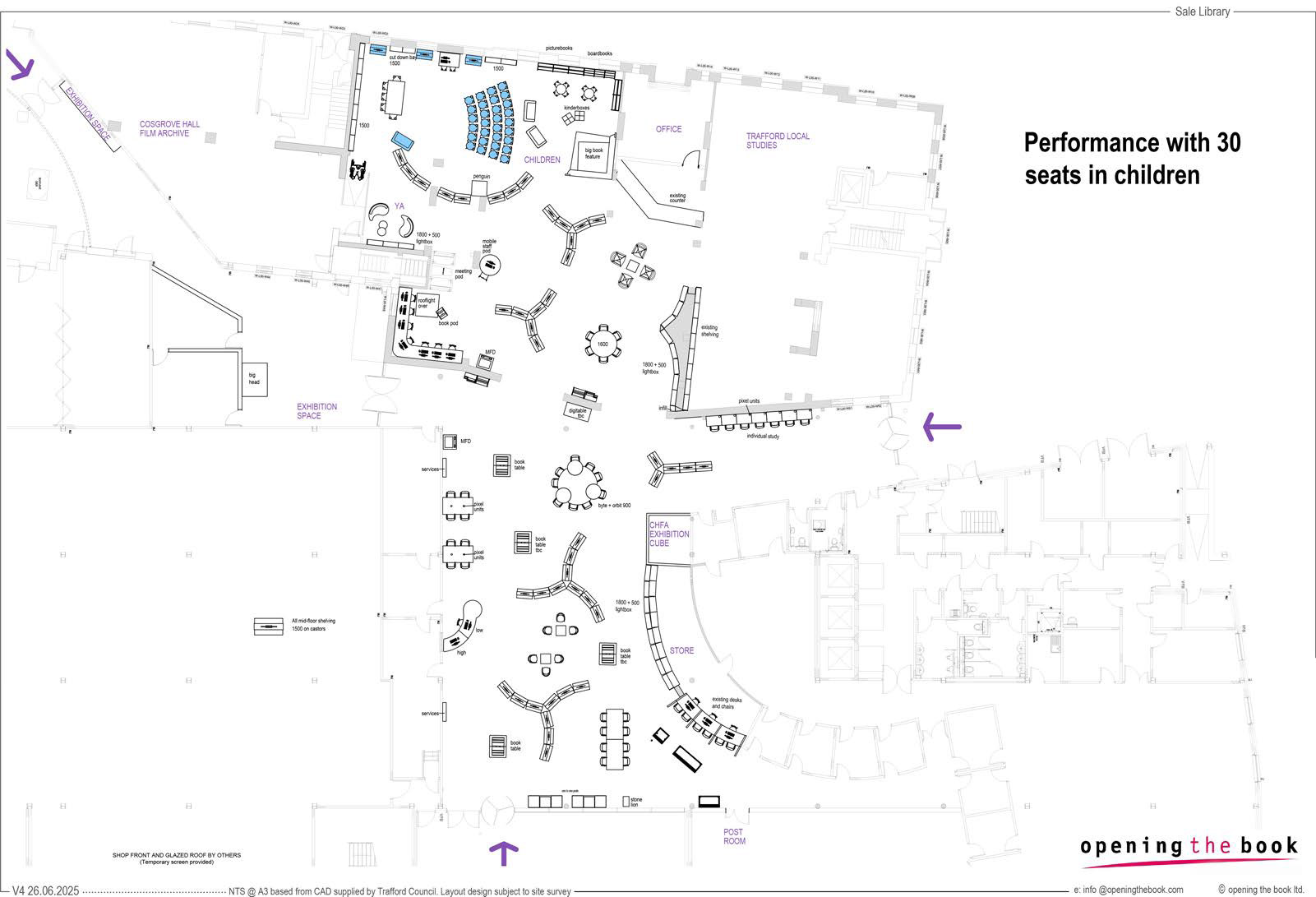
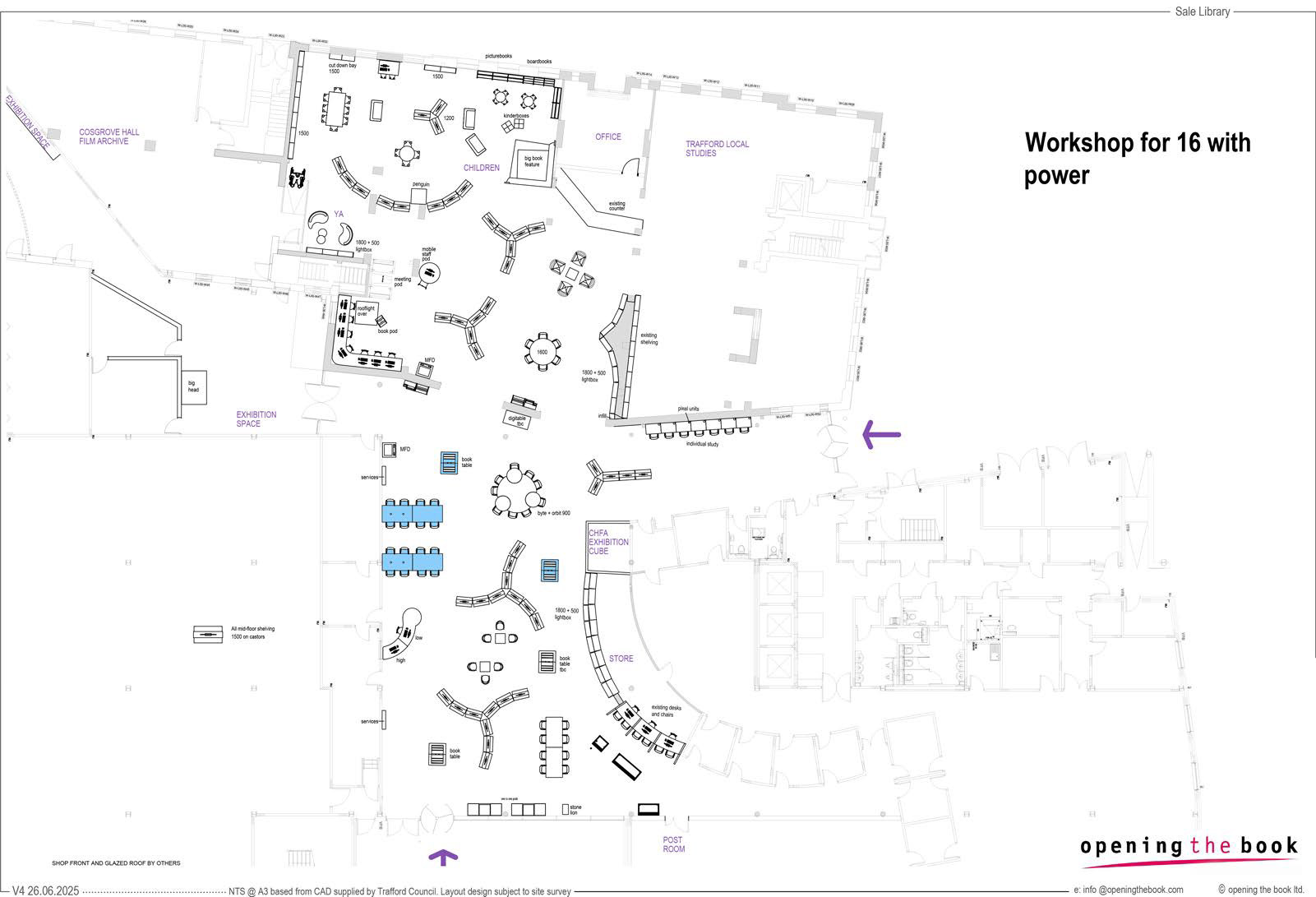
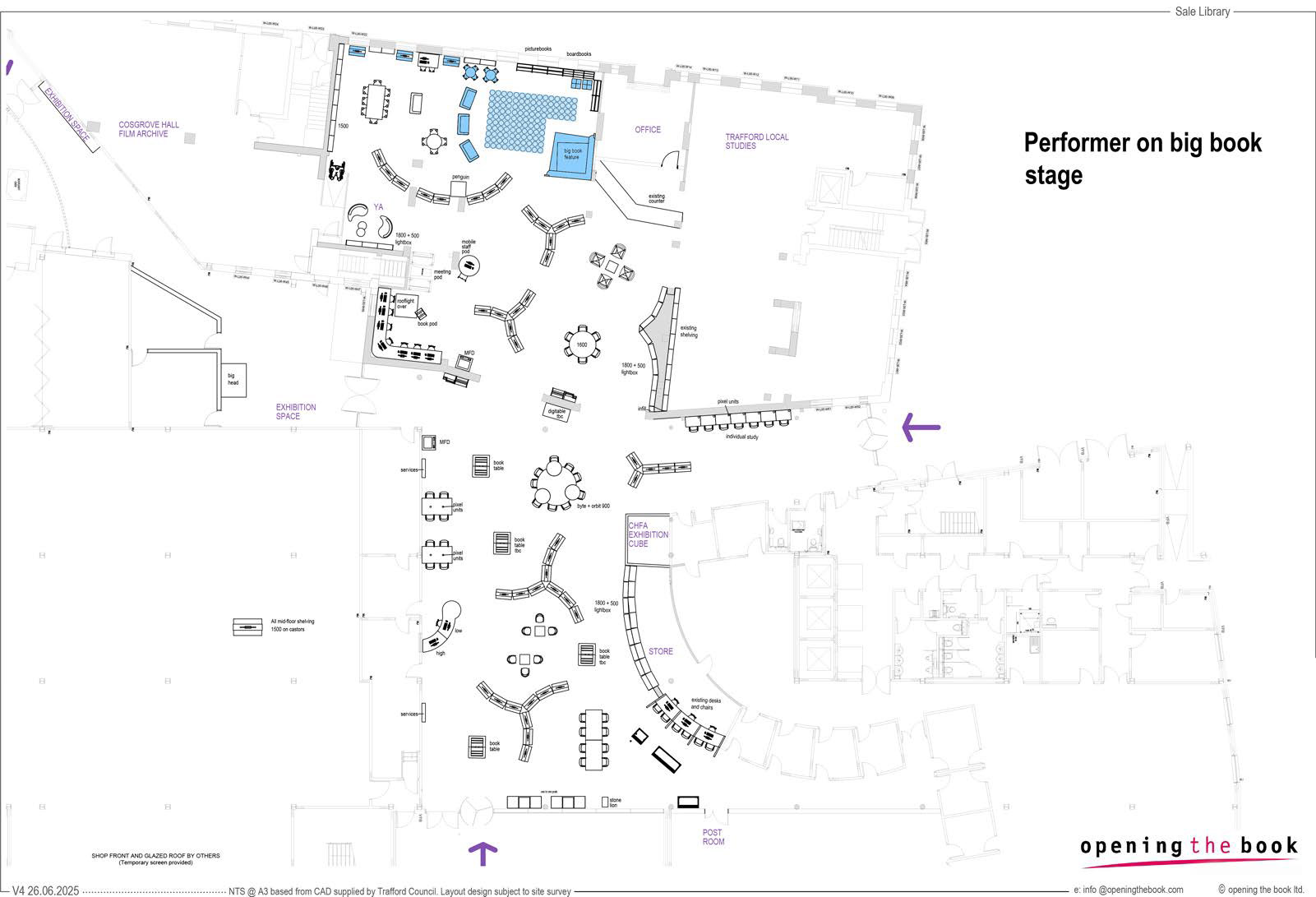
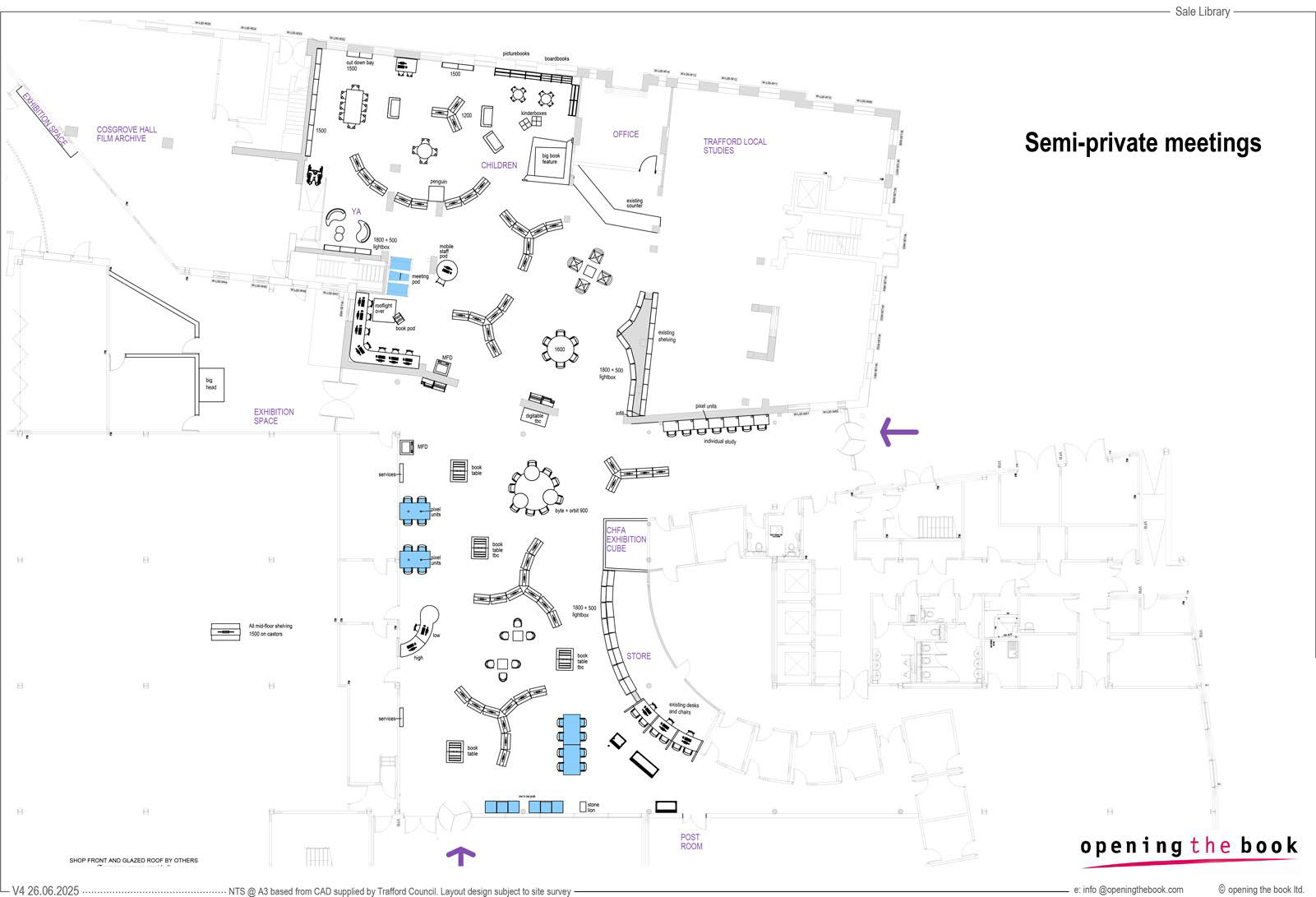
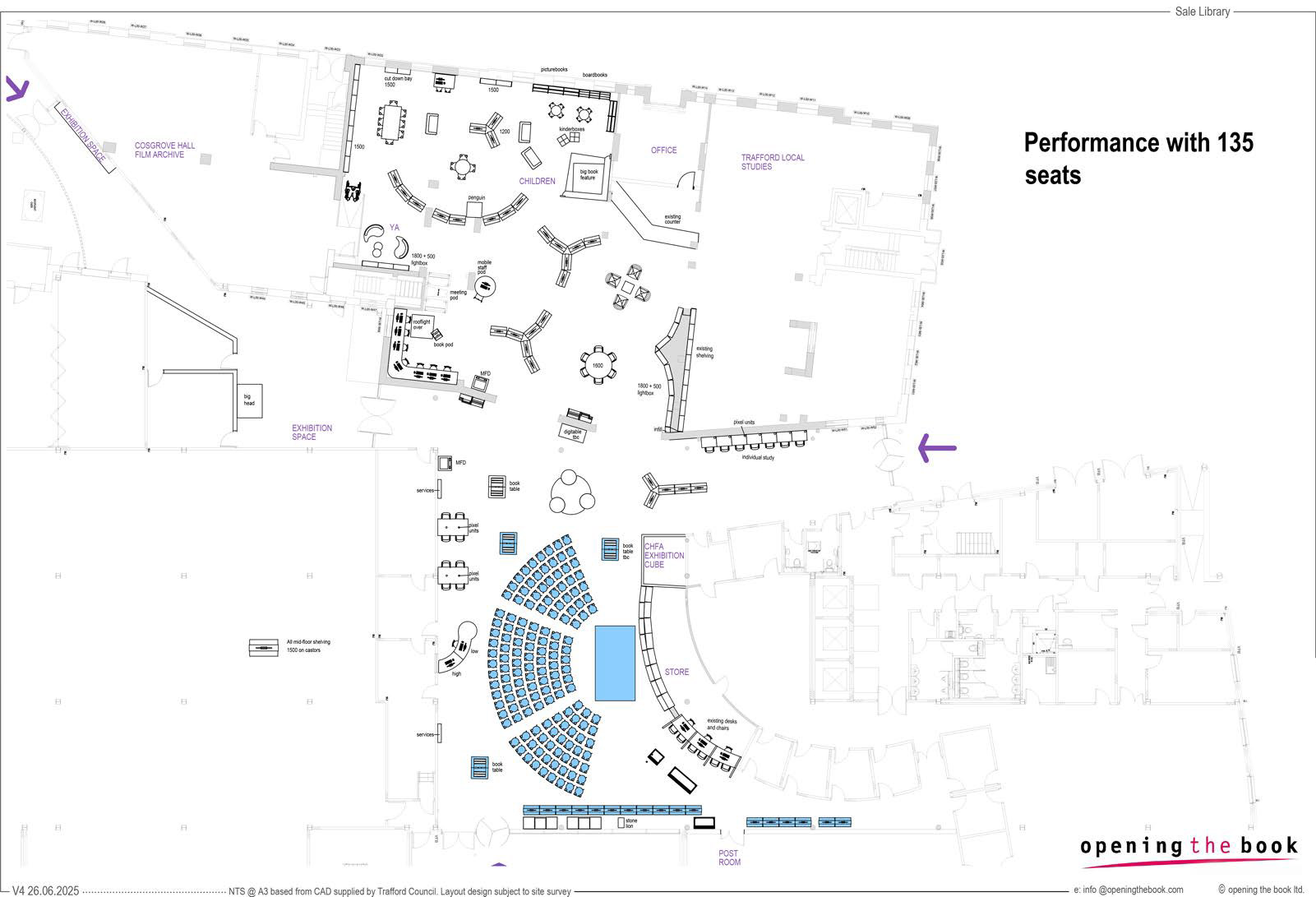
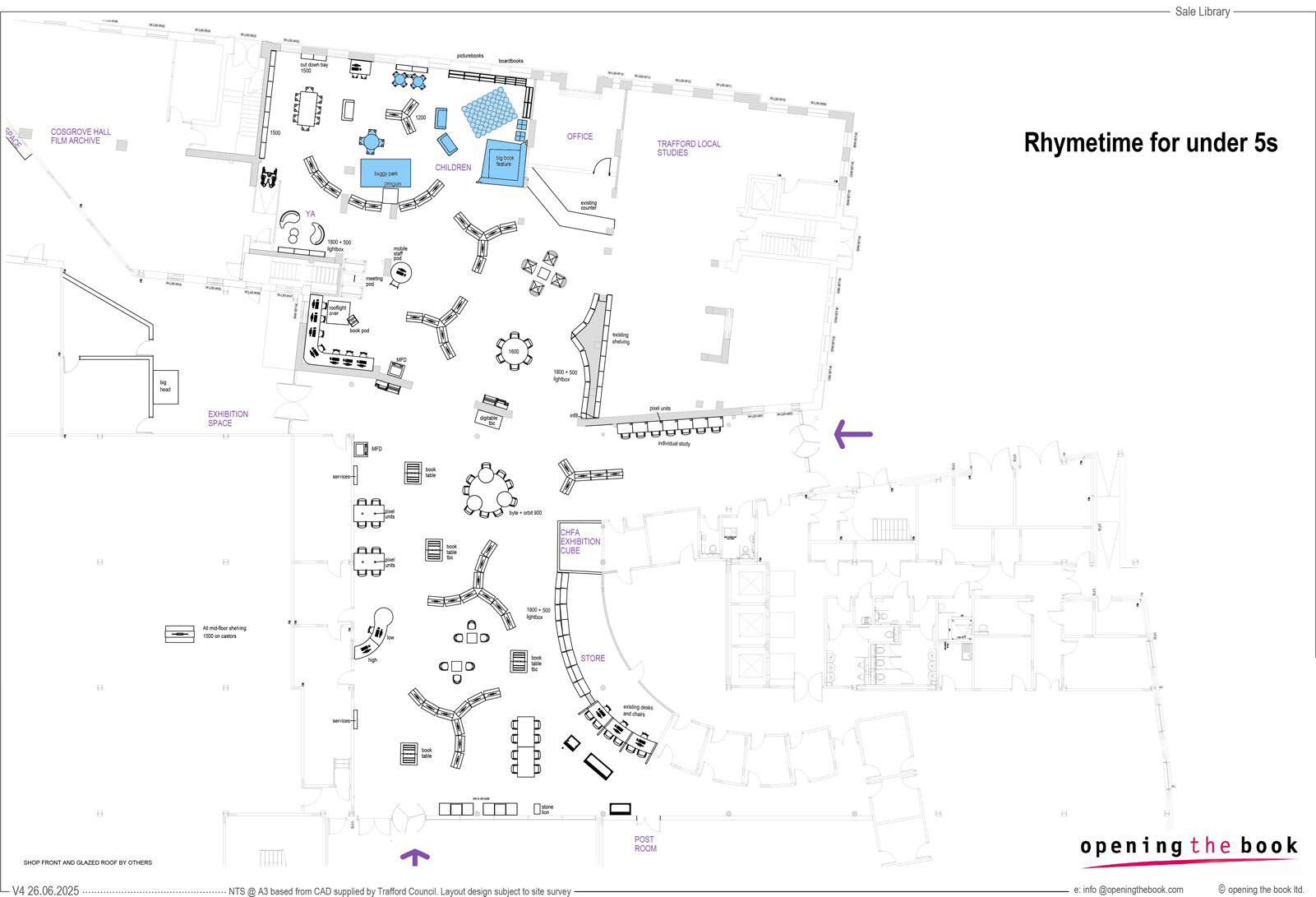
← Scroll to browse all 9 examples →
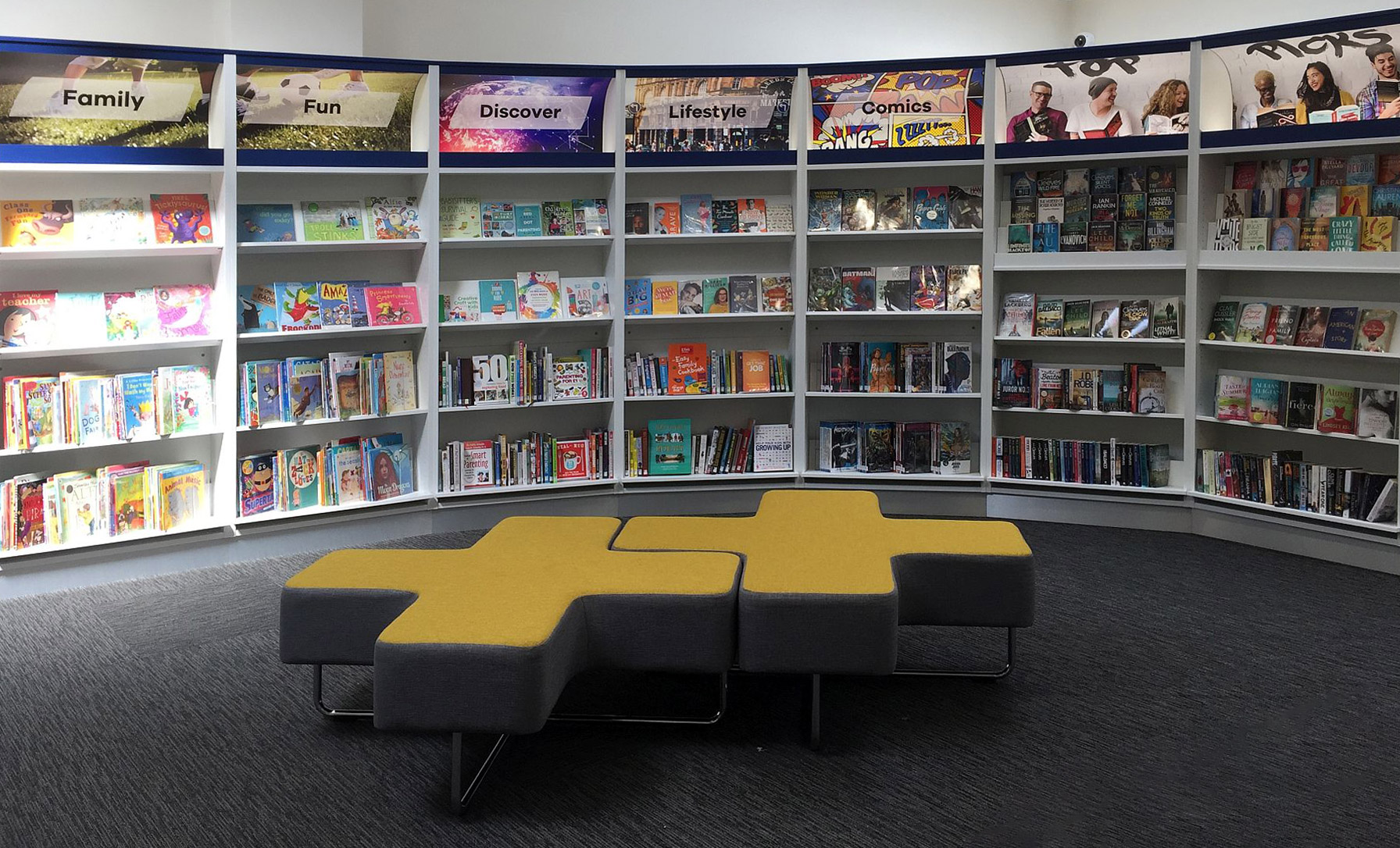
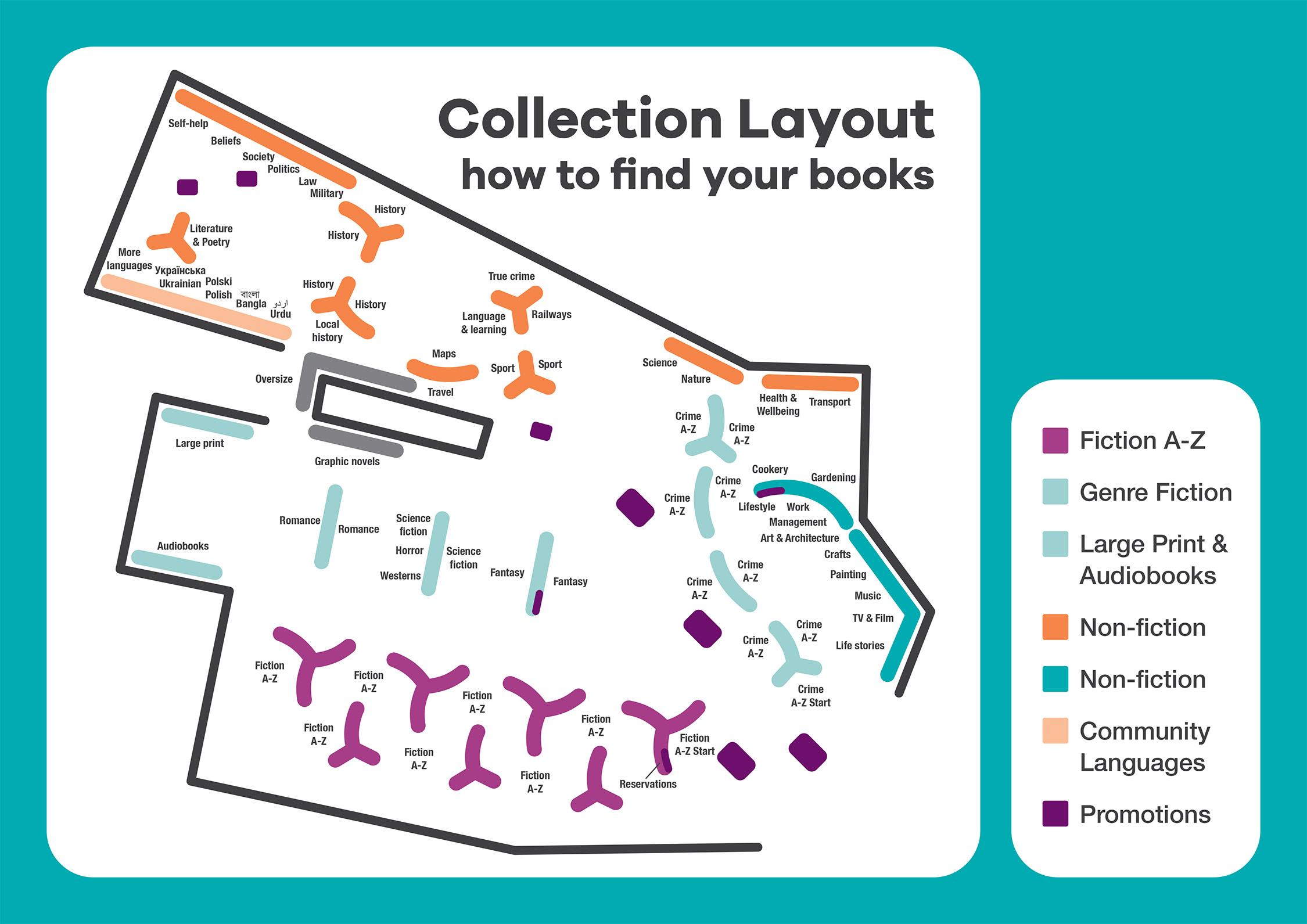
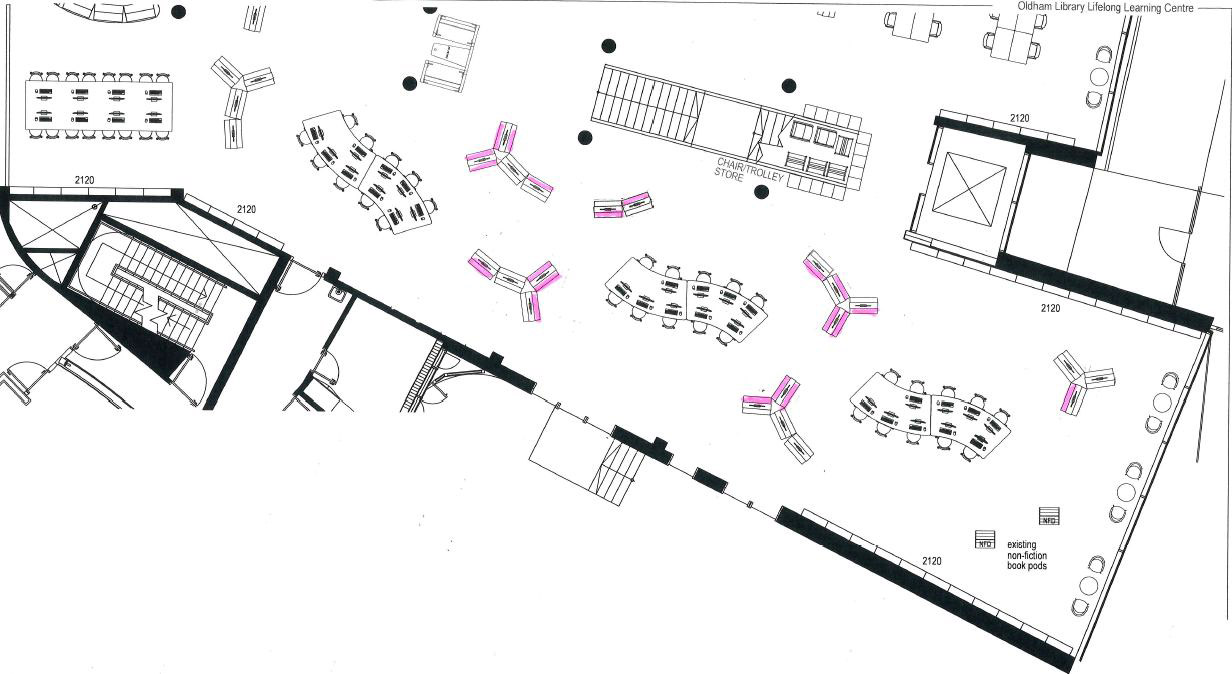
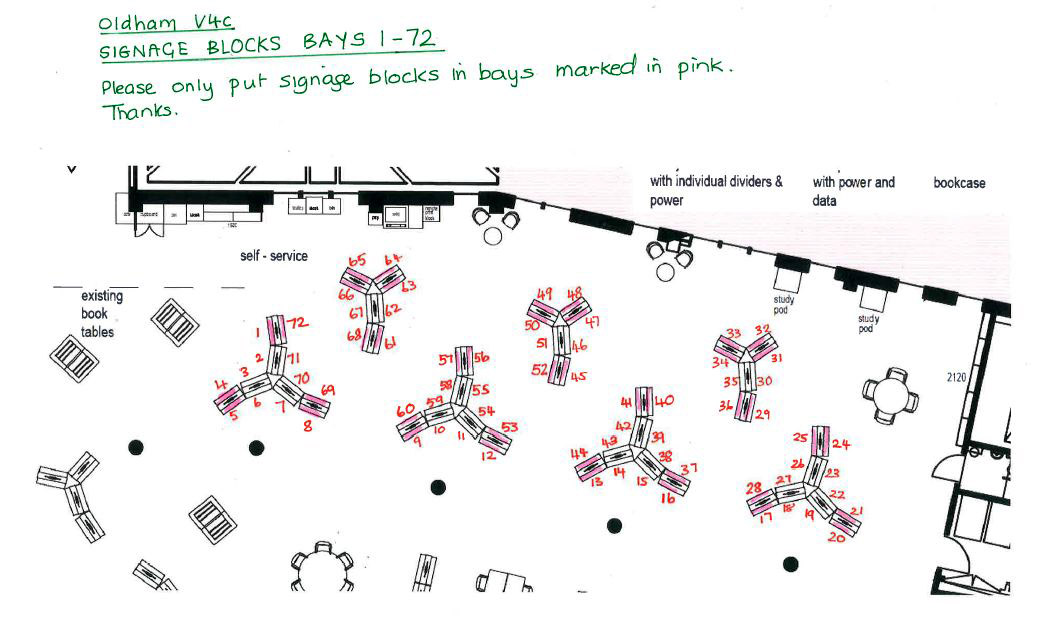
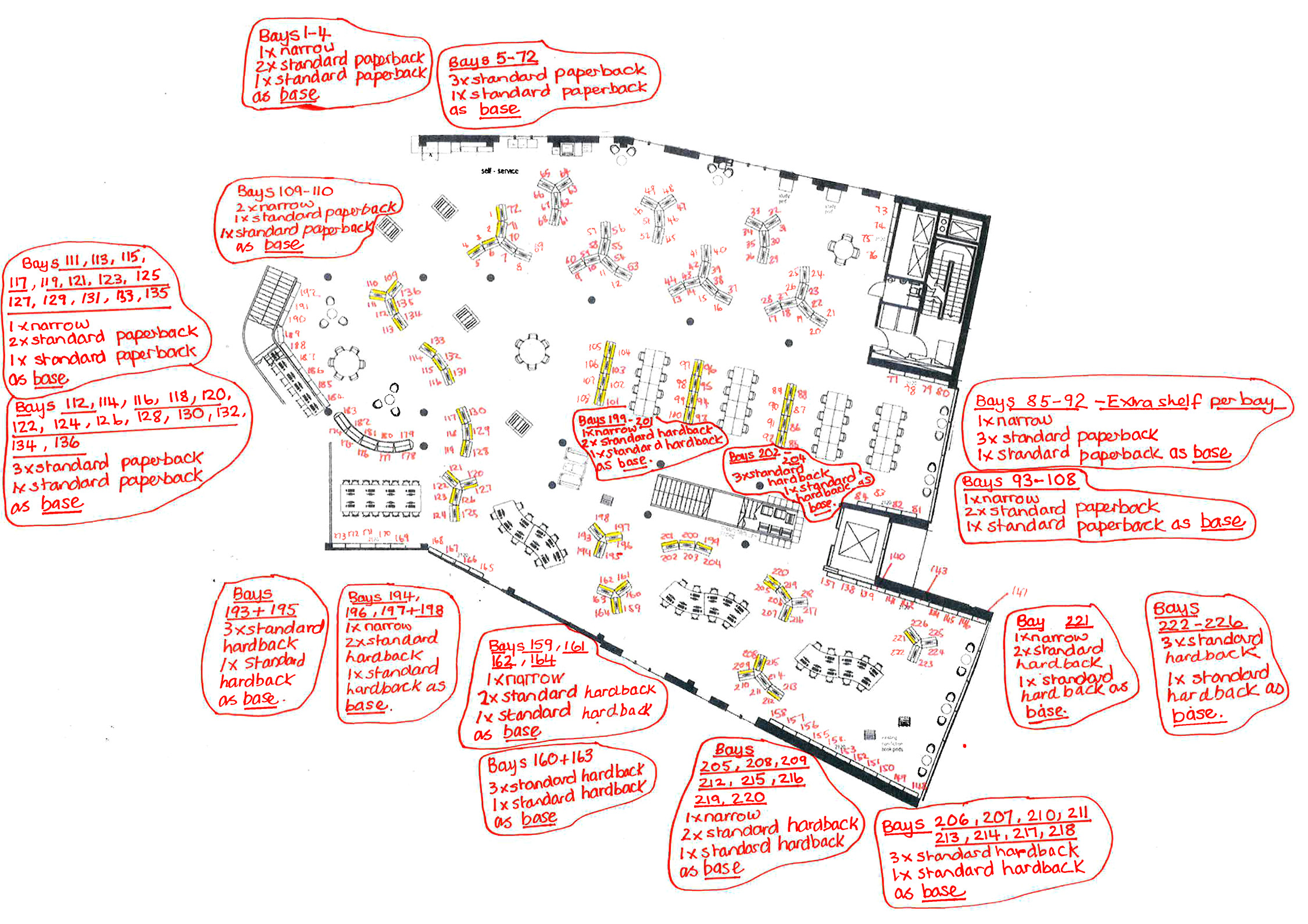
In every library we design, we work with staff to map a detailed collection layout. We consider ratios, sequencing, and adjacencies for the best collection performance. We then create a merchandising plan for every bookcase with shelf settings and merchandising equipment. Everything is installed by our fitters so it is a quick job for staff to stock the shelves before opening.
Each bay is specified as to what stock it holds, what the capacity is (this varies with product size and form of display) and what the anticipated loan rate is. Staff can use the spreadsheet to monitor performance and to plan future stock changes.
Oldham Library Case Study →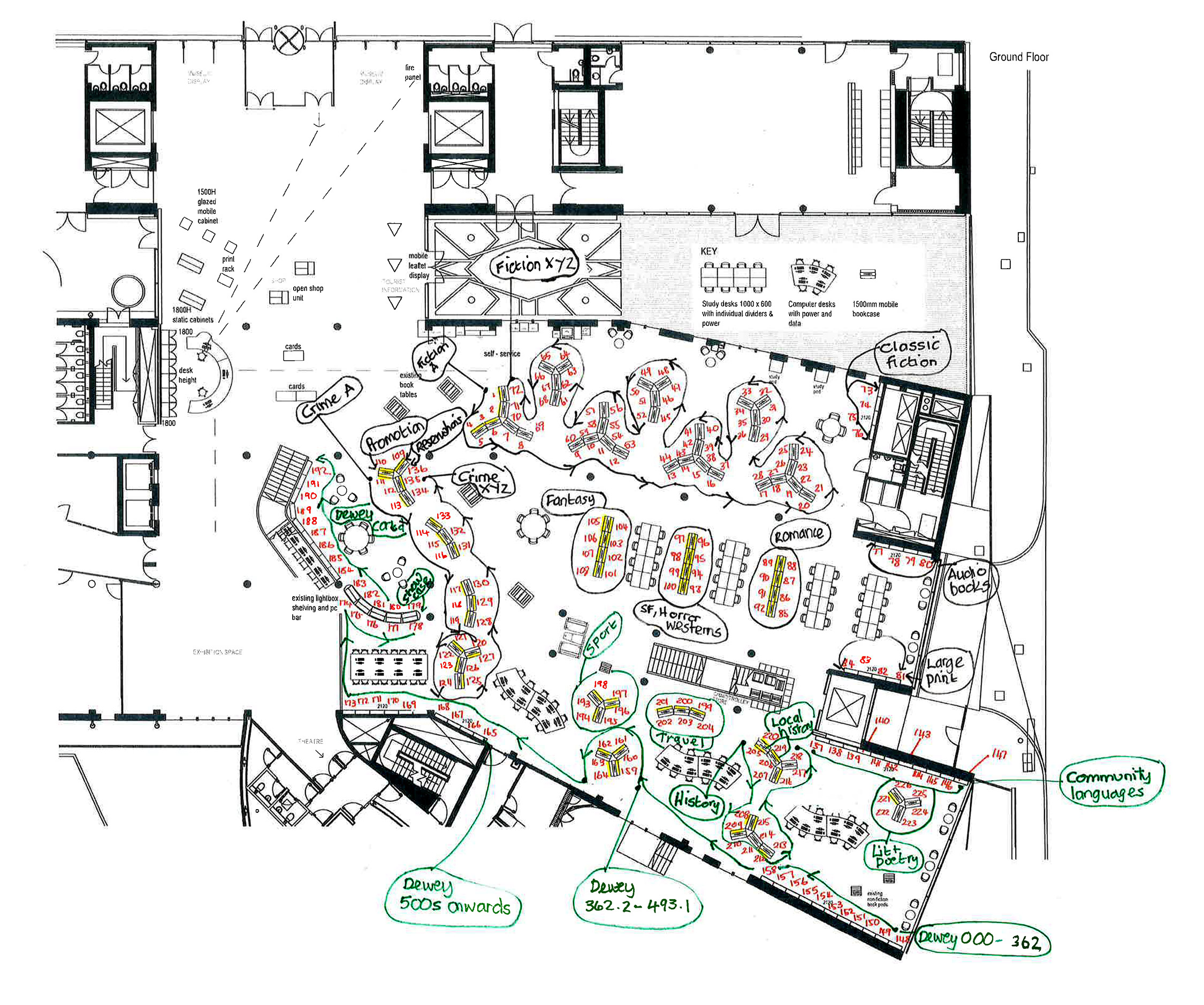
← Scroll to browse all 5 examples →
Also in Library Design
Whether it's a new build, refurbishment, or co-location — we'd love to hear about your project and how we can help.